We’re 3+ years into the world of generative AI, and models have improved immeasurably. The improvement is easy to see in image generation tools; for a full documentation of this evolution, I recommend Ethan Mollick’s “The recent history of AI in 32 otters.”
Sadly, the improvement of AI image generation might best be illustrated by proliferation of AI slop: low-effort, high-volume graphics content. Hard numbers are scarce, but some sources have estimated 34 million images are being generated per day and as much as 70% of marketing and social media campaigns are now using AI-generated resources.
I know from experiences speaking with clients and colleagues, that most of us absolutely do not want to generate AI slop. But it can also be hard to get what we want out of image generations tools. Many of us wind up avoiding image generation altogether, or find ourselves on a slippery slope of “just one more prompt” trying to hone in on the perfect image.
We can do better.
A Case Study in Image Generation
First, for our purposes I’m going to look at two options: Nano Banana (Google) and Midjourney. For comparison, ChatGPT’s photo generation tool is somewhat comparable with Nano Banana, and Ideogram or Stable Diffusion are comparable to Midjourney.
Now let’s say we need an image for use with a newsletter. The article is going to be about the challenge of generating good graphics, but we don’t really know what we want our image to be yet.
Midjourney is more art-based, highly stylized, and delivers 4 options at a time that are often very diverse, based on the prompt. By contrast, Nano Banana is more oriented to photorealism, and generates one image at a time.
In this case I want inspiration and options. I don’t really care if it’s a photo or graphic, so I’ll try my prompt in both Nano Banana and Midjourney.
Create an image of a human drawing a picture but with a bunch of balled-up, failed versions scattered around.
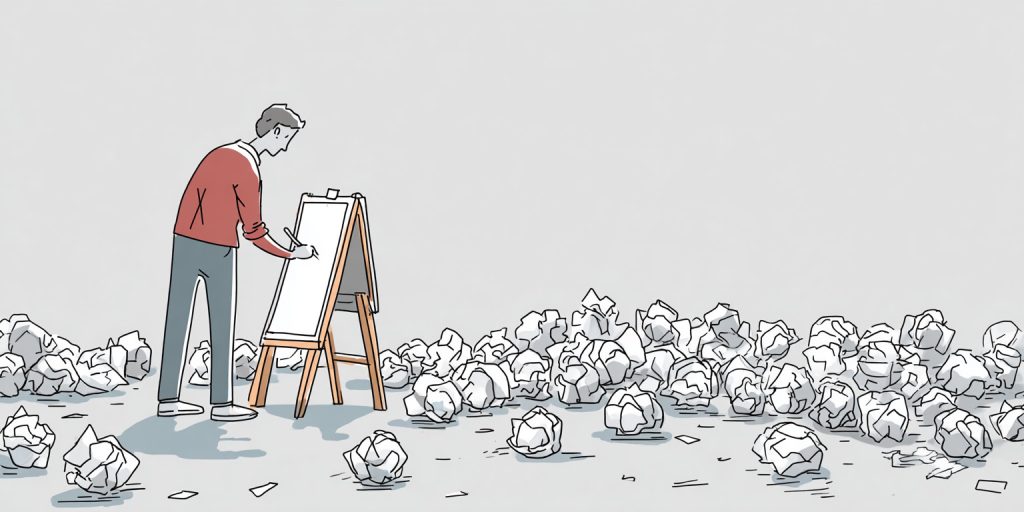
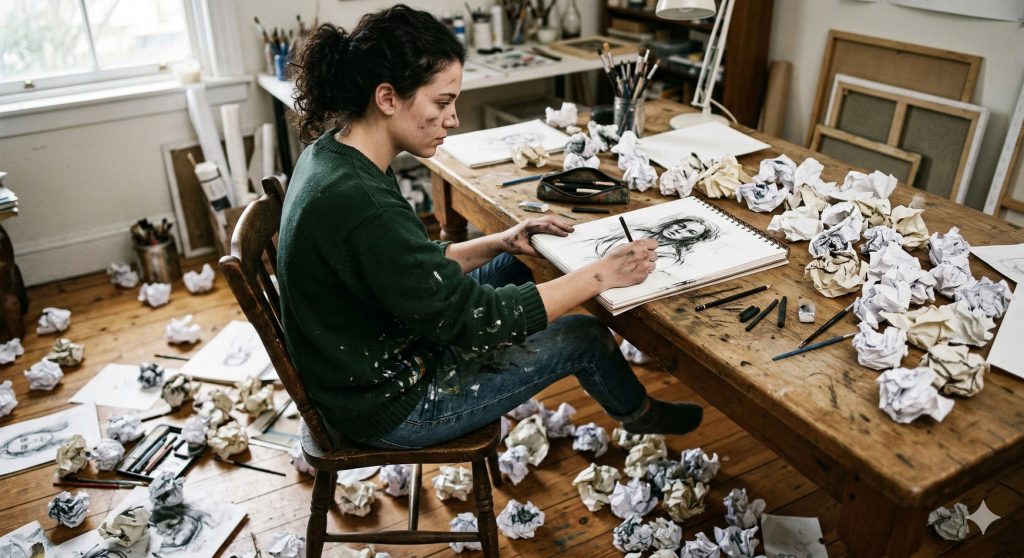
For me, the Midjourney option is the clear winner. It’s simple, but tells a story, though I’m not sure about the “x” on the artist’s back… Meanwhile the Nano Banana option actually has some weirdness with the feet under the desk, along with a slightly frenetic energy. Both images are a bit depressing and I want to improve that.
So next I’m going to take my preferred image (left above) through another prompt. Now my priority is edits to my existing image, in this case, removing the “x” shape and brightening things up. I used the image with the following prompt, once again in both Midjourney and Nano Banana.
Modify this uploaded image to remove the ‘x’ shape from their back and to make the background a brighter, more positive gradient of yellow and orange.
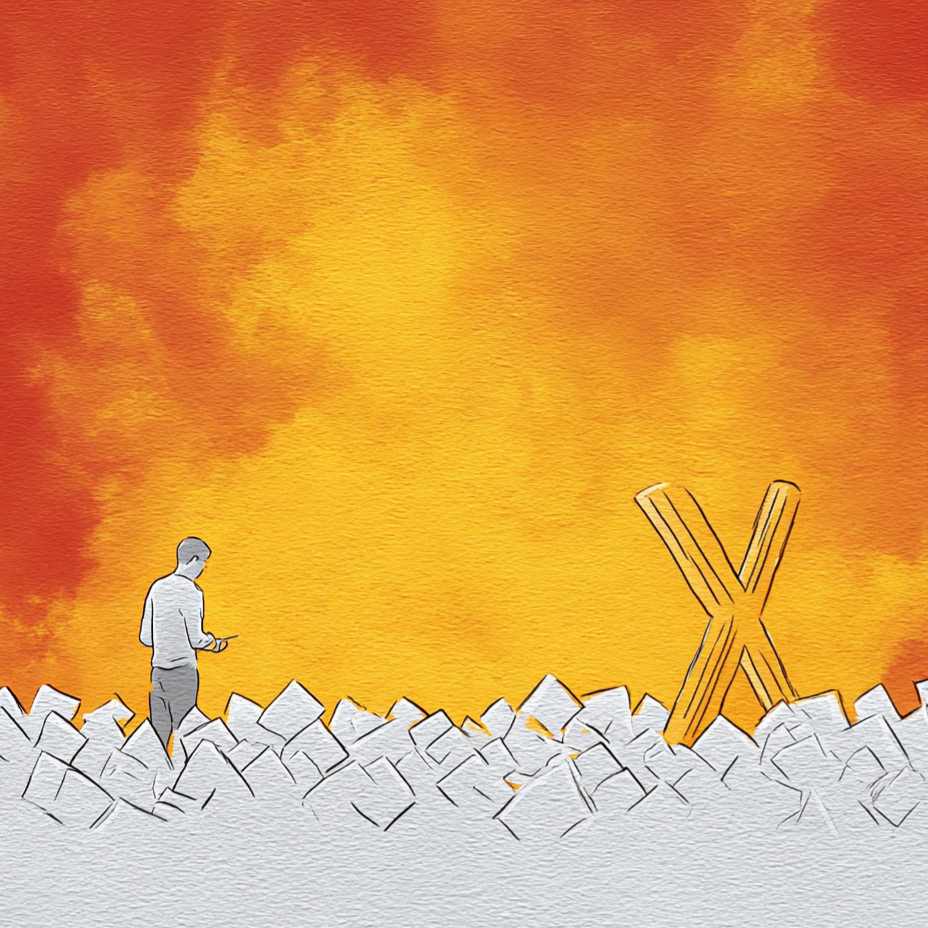
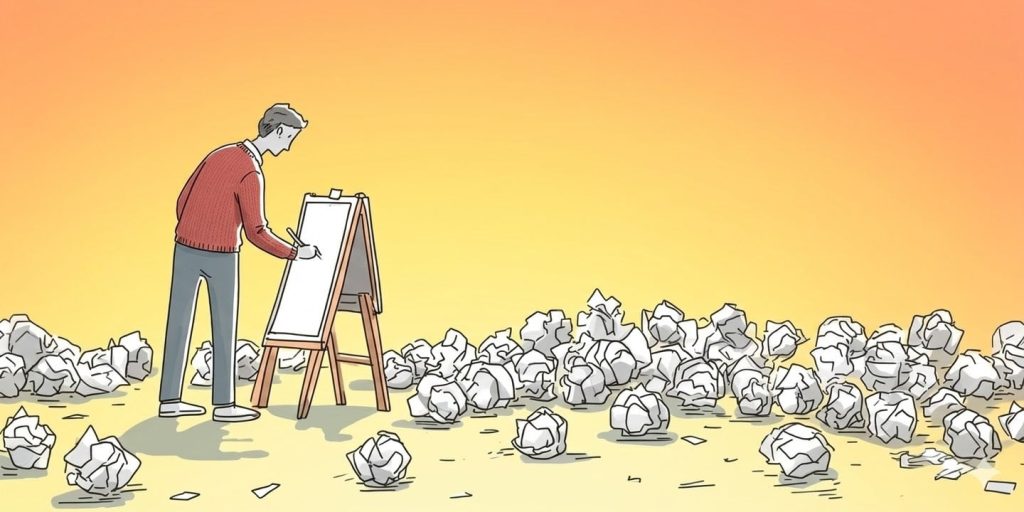
For me, the Midjourney option is the clear winner. It’s simple, but tells a story, though I’m not sure about the “x” on the artist’s back… Meanwhile the Nano Banana option actually has some weirdness with the feet under the desk, along with a slightly frenetic energy. Both images are a bit depressing and I want to improve that.
So next I’m going to take my preferred image (left above) through another prompt. Now my priority is edits to my existing image, in this case, removing the “x” shape and brightening things up. I used the image with the following prompt, once again in both Midjourney and Nano Banana.
Modify this uploaded image to remove the ‘x’ shape from their back and to make the background a brighter, more positive gradient of yellow and orange.
The Takeaways
Tl;dr…
- The right tool depends on what you want. Photos do better with Nano Banana; art is more diverse and well done in Midjourney.
- If you need options, use one of the tools that delivers more (DALL-E, Stable Diffusion), but be aware that this has a bigger impact on energy usage and tokens.
- If you need to make edits to an existing image, Nano Banana is the right tool, and offers best-in-class rendering of text.
Don’t be afraid to use AI generation tools, but please use them sparingly. Ultimately you’ll have less expensive images (in time, in cost of tokens, and in energy/carbon impact) by being clear with your goals and using the right tool for the job.

AI Notetaker Update
In the last newsletter I wrote about AI Notetakers, but I mischaracterized what Granola AI was capable of.
A big thank you to Scott O’Leary of NC State for sharing his experience with Granola so I could fine-tune this comparison!
Read about AI Notetakers for 2026
A very exuberant shout out to the Charlotte B Corp Collective, who became the first sponsor of our Boost Grants with a $250 donation! Their sponsorship helps fund projects for small businesses and nonprofits looking for critical technology support. THANK YOU!
Upcoming Events
WEDNESDAY, 9am-3pm
Cary Founded $5 Community Coworking Day
FRIDAY 9am-3pm
Open Office Hours at The Coven Cary
March 19, 12:00-1:00pm,
SEO and AI: A New Look at Search, The Wright Village
What We’re Reading
Our recent reading goodies.
- AI-generated art can’t be copyrighted after Supreme Court declines to review the rule, from Verge
A lower court’s ruling becomes law: “human authorship is a bedrock requirement of copyright.” - “Women Don’t Need Rescuing”: Navigating the AI Gender Gap in an Industry That’s Obsessed from LBB Online
Across industries and cultures, women use AI less than men. Why? And is it a bad thing? - AI guardrails more popular than beating China, survey finds, from Semafor
- 25 years of iPod brain, from Dirt
Molly Mary O’Brien reflects on the ways in which the iPod reflected her musical growth. And in related news, apparently iPods are back.
“The sun looks down on nothing half so good as a household laughing together over a meal, or two friends talking over a pint of beer, or a person alone reading a book that interests them; and all economics, politics, laws, armies, and institutions, are only valuable in so far as they prolong and multiply such scenes.”
– The Weight of Glory (edited for clarity), by C.S. Lewis